TCI Foundation

            TCI FOUNDATION:Project Kavach 

           Enlightening the lives of Indian truckers


Project Kavach – A Spotlight
Target
Program Elements
Project Kavach
Khushi Clinics in India
Communication Platform
Seena Tan Ke Event April 15
Project Kavach-A Spotlight

TCI Foundation has been implementing Project Kavach, a national HIV/AIDs prevention program for long distance truck drivers and helpers since December 2003 under grant from Avahan, the India AIDs Initiative of the Bill & Melinda Gates Foundation.

Truckers as a group have higher rates of HIV and STIs (11% and 23% respectively according to one survey in South India) than the average male. Their mobility contributes to the geographic spread of HIV in India.HIV prevention programmes focused on truckers have been in place for the last decade or so. However, the mobile nature of the population and the highly fragmented structure of the Indian transport industry make it impossible for any single, stand-alone intervention to establish a sustained relationship / dialogue with the population, no matter how creative the behaviour change messaging at a single location may be.Truckers are not a homogeneous population; they encompass at least nine major ethnicities / regions. There are also substantial differences in the duration of time truckers spend away from home. By virtue of the routes they travel, long distance truckers spend a longer contiguous period of time away from home than do short distance / regional truckers. They also have the potential to take the epidemic from the southern to the northern states over a longer period of time.It is implicitly assumed that regional/ethnic differences, together with differences in duration of time spent away from home contribute to degree of vulnerability to HIV.


The Target

The goal of this project is to arrest the spread of HIV among long distance truckers in India.
The specific objectives are:
Adoption of safer sexual behaviour and practices by long distance truckers through Behaviour Change Communication (BCC) strategy.
Promote use of condoms among long distance truckers through improving access; and
Reduce the incidence of various Sexually Transmitted Diseases(STD)among long distanc trukers through appropriate clinical intervention.These will also include supplementary services,such as, general health services, rest and recreation facilities, secure parking facilities, insurance etc which have been observed to positively influence the number of truckers who halt as well as the time spent at a halt centre.


The Program Elements:

The program is present at 17 large intervention locations, bulk of which are trans-shipment locations/Transport Nagars. The locations have been strategically selected based on the twin criteria of volume of long distance trucks available and average time spent at the location for meaningful engagement with different facets of the program.

Behaviour Change Communication: The program uses an innovative Peer Led Dialogue Based methodology for interpersonal communication. With technical support from PATH, an Avahan capacity-building partner, a cadre of 360 peers, which include current and ex truck drivers and helpers, has been recruited, trained and deployed across the program interventions. Using 9 innovative participatory dialogue based tools, the peers interface with more than 50,000 truckers across the program on a monthly basis.
  • Peer Led Dialogue Based Interpersonal Communication
     1. All IPC sessions have 8 to 10 participants
     2. The sessions use participatory tools

     3. Sessions are coordinated by a team of two trucker peers
     4. Session length is upto 90 minutes
     5. The sessions are intense and focus on presentation of problems by the community and conclude with solutions agreed by the participants
     6. Timing, location and frequency of sessions is synchronised with other program elements such as mid-media and provision of health services through mobile / satellite clinics
     7. Clinic referrals are provided to those requiring medical attention
  • Synchronised and thematized mid-media

Recognizing that low self-esteem is an underlying cause for high-risk behaviour among truckers, the program aims to enhance health-seeking behaviour, promote safe sex and uptake of medical services at Khushi Clinics through an innovative campaign called Seena Taan Ke. This campaign, using multiple media channels, weaves self-esteem and health messaging uniquely for maximum impact.

The program conducts 1,050 mid-media events per month exposing an audience of 45,000 to its focussed messaging. Mid-media, IPC and clinical services are integrated for generating greater awareness and greater impact.               

    § Street Plays: 8-12 per intervention location per month. At least three scripts on different themes promoting health seeking behaviour, dispelling myths around STIs and promoting condom use are systematically played out at all interventions for three months duration. Thereafter, the themes and scripts change. This builds synchronized and focussed messging across the program
    §    IEC Booths with Health games: 48 per month synchronised with satellite clinic timings and location. These participatory health games are a useful medium for generating clinic traffic and program awareness
    § Film Shows:4 mainstream entertainment movies per month shown at broker / transport offices / drop in centres followed by IPC sessions
    § Infotainment programs or truckers Utsavs:1 to 4 per intervention location per year with an average attendance in excess of 1,000 truckers
    §  Celebrity involvement: The program has collaborated with Heroes Project, an Avahan partner to creatively involve celebrities with the program for greater reach and impact.

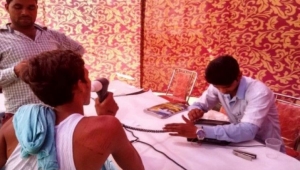
Ø       Treatment of Sexually transmitted infection: The program owned and branded “Khushi Clinic” is the visible manifestation of the program at each intervention location. The national chain of Khushi Clinics provides:  

       o  Quality medical care through multiple full-time medical teams comprising qualified medical                      practioners, trained nurses and counsellors.

o        Free medical consultation and counselling; medicines are provided at cost

o        Khushi Clinics address the general health needs of the trucking community as well as STI treatment

o        Syndromic case management is the protocol for STI treatment with Clinic Operating Guidelines prepared with technical support from FHI, an Avahan partner.  

o        The programs invests in capacity building of the medical team and stringent monitoring of health care quality through a central team of STI specialists  

o        Brokers Strategy:

§         The project has established multiple satellite clinics (70 at present) at large intervention locations by deploying a second full time medical team at each location

§         Satellite clinics are located in the premises / in proximity to the premises of long distance transporters and brokers by using mobile vans / mobile tents

§         Medical care is brought to the door-step of the user

§         Stake of the secondary stakeholder i.e. the transporter / broker in the program is established

§         The program now does 2/3rd of the treatments at satellite locations and 1/3rd at the Khushi Clinic (also called the static clinic)

§         Currently monthly medical service uptake across the program is 15,500 with 3,500 STI treatments.

Ø      Condom Marketing: The program is marketing condoms to the truckers primarily through         non-traditional outlets in the intervention locations. Outlet owners are trained to conduct condom demonstrations, they are also provided IEC materials to help promote clinic services. 800 non-traditional outlets sell 100,000 condoms per month across the program sites.The Project has technical support from PSI in the social marketing of condoms component of the program.

  Ø Corporate Involvement:


Project Kavach: A national HIV/AIDS Prevention Program for Long Distance Truckers in India

The Experience of TCI Foundation  

Mobile populations on cyclical routes need to be addressed by a network programming approach that:

o        Builds sustained engagement by leveraging interactions across multiple locations

o        Creates a consistent interface by standardised service delivery and synchronized messaging

o        Enhances self-risk perception and creates community ownership through peer to peer discourse  

The Industry

o        2 million long distance truckers

o        66,000 km of national highways

o        78 % working for single truck owners  

Lives Of Truckers

Time spent:

o        55-70% on the road

o        14-25% at trans-shipment locations

o        2-5% at check-posts

o        12-18% assorted activities (fuelling, mechanical attendance,

Risk Profile

o        36% clients of sex workers

o        36% of those use condoms with sex workers

o        2-11% HIV positive

o        10-15% have at least one STI  

Project Kavach

o        Branded National Network of Interventions along major Highway hubs

o        High level of integration of program elements

o        Innovative peer led dialogue based communication model

o        Multiple program owned medical service extensions

o        Social marketing of condoms through non traditional outlets

o        Structural intervention through multiple corporate alliances  

Project Kavach: Indicators

o        Monthly Coverage through Peer Led Dialogue Based IPC: 50,000

o        Monthly mid-media events: 1,050; Coverage: 45,000

o        Monthly treatments at clinics: 15,500

o        Monthly STI Treatments: 3,500

o        Condom outlets: 800, monthly condoms socially marketed: 100,000  

TCI Foundation

National Project Management Unit

69 Institutional Area, Sector 32

Gurgaon 122002, India

Telephone:           +91 124 2381603-07

Fax:                       +91 124 2384086

Web: http://tcifindia.org/ 

Enquiries and Information: mailto:tarun.tcif@tcil.com  


Khushi Clinics in India
Sno. Intervention Locations        NH NGO States
 1 Delhi SGTN        1 Child Survival   India Delhi
 2 Delhi UP Border        2 CEVA Uttar Pradesh
 3 Nelamangala DTT        4 Bhoruka    Charitable Trust Karnataka
 4 Mumbai Kalamboli        4 Bombay Leprosy Project Maharashtra
 5 Indore        3 Bhartiya Gramin Mahila Sangh Madhya Pradesh
 6 Kanpur        2 Nirman Seva Sansthan Uttar Pradesh
 7 Pune Nigdi        4 Sevadham Trust Maharashtra
 8 Hyderabad 7&8 intersection Bhoruka Charitable Trust Andhra Pradesh
 9 Jaipur         8 VATSALYA Jaipur
 10 Nagpur         6 Indian Institute of Youth Welfare Maharashtra
 11 Agra         2 CREATE Uttar Pradesh
 12 Varanasi         2 Jankalyan Maha Samiti Uttar Pradesh
 13 Icchapuram         5 BPWT Andhra Pradesh
 14 Jamshedpur         33 TSRDS Jharkhand
 15 Dhanbad         2 & 23 Gram Pradyogik Vikas Sanstha Jharkhand
 16 Hubli         4 Bhoruka Charitable Trust Karnataka
 17 Jamsola         6   Orissa


Communication Platform

SeenaTanKe.pps

Seena Tan Ke Event April 15

Richard Gere’s Message: http://www.youtube.com/watch?v=H8Gen0NMqhQ

Sunny Deol’ Message: http://www.youtube.com/watch?v=DAYdEsjFTtw